
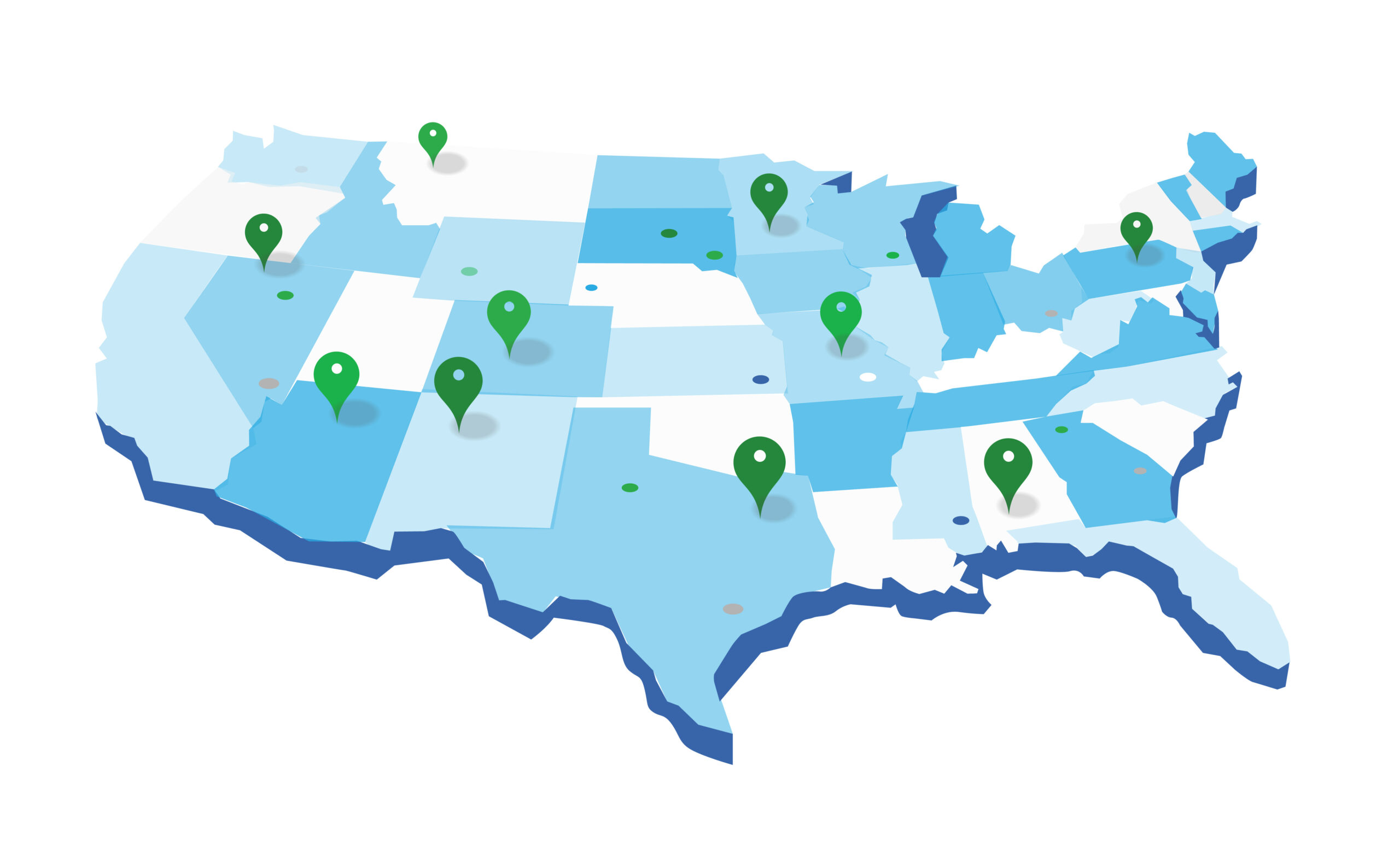
The One Big Beautiful Bill Act restored immediate expensing for domestic research expenses under new Section 174A. Most tax teams treated that as good news and moved on to the next issue. For a multistate Fortune 100 filer, though, the federal change only covers half the story. States don’t automatically follow federal law. Several states that decoupled from prior Section 174 amortization rules haven’t adopted 174A on the same timeline, and some haven’t adopted it at all.
We touched on this shift in our overview of what tax teams need to know about R&D credits this year. This post looks closer at the state-by-state exposure that a federal-only view tends to miss.
Why Conformity Isn’t Automatic
States generally fall into three categories:
- Rolling conformity states adopt the Internal Revenue Code as currently in effect, so federal changes flow through automatically, without any legislative action.
- Fixed-date conformity states adopt the code as it existed on a specific day. A federal change like Section 174A doesn’t apply there until the legislature votes to update that date.
- Decoupled states set their own research expensing standards entirely, independent of whatever Congress does at the federal level.
For an organization filing in dozens of states, this creates a genuine patchwork. Your federal return might reflect full domestic research expensing under 174A. Meanwhile, three or four states where you file could still require amortization under their own rules, or apply an entirely different treatment to the same expenditure.
Where This Creates Real Exposure
Under-claiming a state benefit happens often, and it costs money. But that isn’t the only risk. Inconsistency between your federal and state filings creates a second, arguably larger problem, because it draws attention during routine review. If your state return doesn’t reflect the correct addback or adjustment for a state that hasn’t conformed to 174A, you’ve created a discrepancy. A state auditor can spot that gap right away by comparing your federal and state taxable income reconciliation.
This matters more for organizations with material R&D spend concentrated in a handful of states. If your largest research operations sit in a state with a fixed conformity date that predates OBBBA, the amortization requirement there could differ substantially from your federal treatment. That difference has to show up correctly on every return you file in that state, not just the ones your team happens to review most closely.
State-by-State Conformity Checklist
Work through this for every state where you file:
- Identify the state’s conformity type: rolling, fixed-date, or decoupled
- For fixed-date states, confirm whether the legislature has updated its conformity date since OBBBA passed
- For decoupled states, confirm their independent research expensing treatment (don’t assume it matches federal)
- Confirm your state return reflects the correct addback or adjustment where the state hasn’t conformed to 174A
- Cross-check federal and state taxable income reconciliation for discrepancies
- Flag any state-specific election you haven’t made yet but may need
Building a State-by-State Conformity Map
Start with a straightforward exercise: list every state where you file, and classify each one using the categories above. This map isn’t something you build once and file away, though. State legislatures update conformity dates during regular sessions, often with little advance notice, so a map built in early 2026 may already be out of date by the time you file. Build a review cadence into your process instead of treating this as a single point-in-time analysis you never revisit.
State Credits Add Another Layer
Beyond conformity to the federal expensing rules, many states offer their own R&D tax credits with separate eligibility requirements, documentation standards, and filing deadlines. A multistate organization that only optimizes its federal Section 41 credit is likely leaving state-level incentives on the table without realizing it. Our state tax incentives work helps large filers identify where those opportunities sit and how to capture them without duplicating effort already done at the federal level.
Coordinating Federal and State Strategy
Organizations that handle this well treat federal Section 174A elections and state conformity analysis as one coordinated project, rather than two separate workstreams handled by different teams on different timelines. Our 174 assistance work bridges that gap directly. It helps tax teams confirm their federal capitalization and expensing decisions translate correctly into every state where they file, instead of assuming a level of conformity that may not actually exist.
What to Do Before Your Next Filing Cycle
Pull your current state filing footprint and run it against the checklist above before you finalize any amended returns or retroactive elections. Confirm which states require an addback, which states already conform on their own, and which states need a separate state-specific election you haven’t made yet.
Federal law changed quickly this year. State law is catching up at very different speeds from state to state, and some states may not move at all in the near term. A tax team that only reviews its federal position risks getting the largest number right while getting several smaller ones wrong. Across a large multistate footprint, those smaller errors add up quickly.
Where to Start
Pick the five states where your organization has the largest research footprint, and confirm each one’s current conformity status before this quarter closes. That short list will tell you more about your real exposure than a broad review of all fifty states. It gives you a clear starting point instead of an open-ended research project with no deadline attached.
If you’d rather talk through your specific state footprint than build the checklist from scratch, reach out and we can walk through it together.

December 16, 2026
2:00 pm EST



 The 6765 Business Component Solution
 Full Outsource
 Big 4 to In-House
 Reverse Audit
 State Tax Incentives
 Tax Controversy
 R&D Staffing Services
 174 Assistance